Ten of Australia’s 26 major coal-fired power stations have closed since 2012, and the Australian Energy Market Operator (AEMO) projects that almost two-thirds of the remaining coal fleet could retire by 2035, and that electricity consumption will roughly double by 2050. Replacing that capacity while meeting rising demand means a multi-decade build-out of wind, solar, storage and transmission.
For investors, that build-out may create investable exposure across generation, storage and transmission, well beyond wind farms and solar panels. This guide explains where investment is required, the main ways to gain exposure, and how to distinguish a compelling narrative from a sound investment case.

AEMO projects grid-scale wind and solar capacity growing from 23 gigawatts (GW) as at June 2026 to nearly 120 GW by 2050, supported by storage and new transmission.
Source: AEMO 2026 Integrated System Plan (ISP) projections, Step Change scenario
What Is Driving Renewable Energy Investment in Australia?
Three forces are at work: ageing coal plants that need replacing, rising demand for reliable supply, and government policy supporting lower-emissions generation. AEMO’s 2026 Integrated System Plan (ISP) finds that renewables connected by transmission, firmed with storage and backed by gas are the least-cost path for the National Electricity Market.
Policy is also shaping project economics. The federal Capacity Investment Scheme, administered by the Department of Climate Change, Energy, the Environment and Water (DCCEEW), underwrites revenue for eligible renewable generation and clean dispatchable capacity, such as batteries, to help projects proceed. That support applies at the project level; it does not guarantee returns to investors in related companies or funds.
The Investment Value Chain
Because the grid works as one connected system, investment is required across the whole value chain rather than in a single technology.

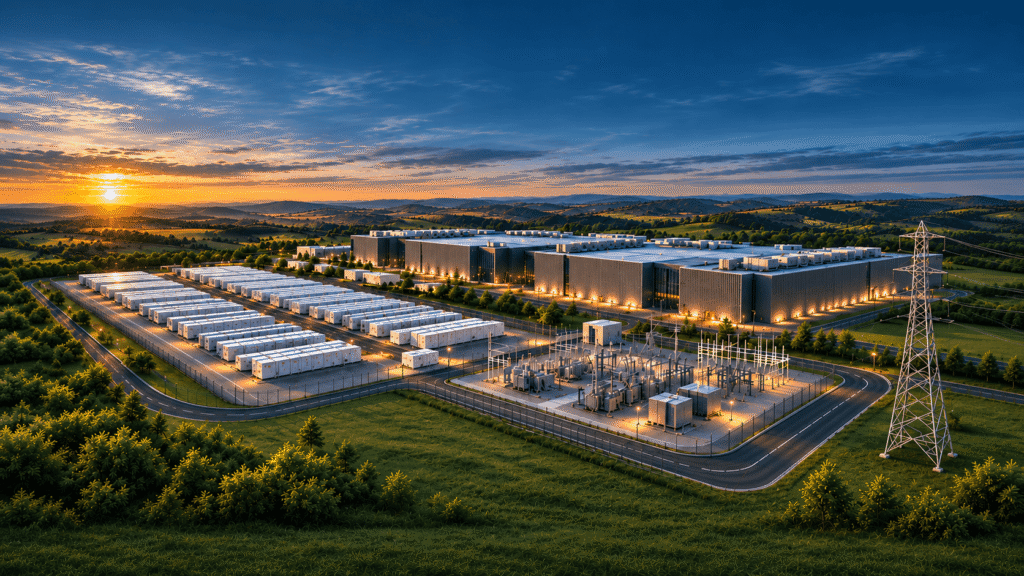
Generation, storage and transmission are complementary, so investment is needed across all three to deliver power to homes and businesses.
Source: AEMO 2026 Integrated System Plan. Illustrative only.
Not every part of the chain has the same earnings outlook. The Australian Energy Regulator (AER) notes in its 2026 wholesale market report that the recent fall in price spreads will affect the investment outlook for batteries, while wind, solar and gas face weaker investment signals. It is a reminder that necessary infrastructure and attractive returns are not the same thing.
Choosing How to Gain Exposure
The first decision is what is being owned. Each route carries different market, liquidity and operational risks, so a shared clean-energy label does not make them comparable.
| Route | What is owned | What to check |
|---|---|---|
| Listed shares | Part of an energy company, priced daily on the ASX | How much revenue actually comes from renewables, and the company's funding needs |
| ETFs and managed funds | A basket of energy-related holdings in one investment | Largest holdings, how "clean energy" is defined, concentration and fees |
| Unlisted funds | Exposure to specific projects or loans, valued periodically. Capital may sit as project equity (exposed to price and delivery outcomes) or as debt (typically ranks ahead of equity in repayment, but still carries credit and liquidity risk) | Project stage, whether capital is equity or debt, liquidity terms, and manager experience, governance and reporting |
Moneysmart notes that a thematic ETF remains exposed to its chosen sector, so owning many holdings is not the same as being diversified. Our guides to Listed vs Unlisted Property Funds and Managed Property Funds in Australia explain how these structures differ, and Private Credit Funds in Australia covers private lending more broadly.
Key Terms in Renewable Energy Investment
A few terms come up repeatedly when assessing renewable energy projects:
| Term | Meaning |
|---|---|
| Merchant revenue | Income from selling electricity at wholesale market prices, which can vary significantly |
| Contracted revenue | Income secured at an agreed price with a buyer, reducing exposure to wholesale price movements |
| Offtake agreement (PPA) | A power purchase agreement in which a buyer commits to purchase a project's output on agreed terms |
| Curtailment | A reduction in the electricity a project can export, often due to network limits or system security requirements |
| Firming | Backing up variable wind and solar output with sources that can supply power on demand |
| Dispatchable capacity | Generation or storage that can be turned up or down when needed, such as batteries, pumped hydro or gas |
How to Assess a Renewable Energy Project
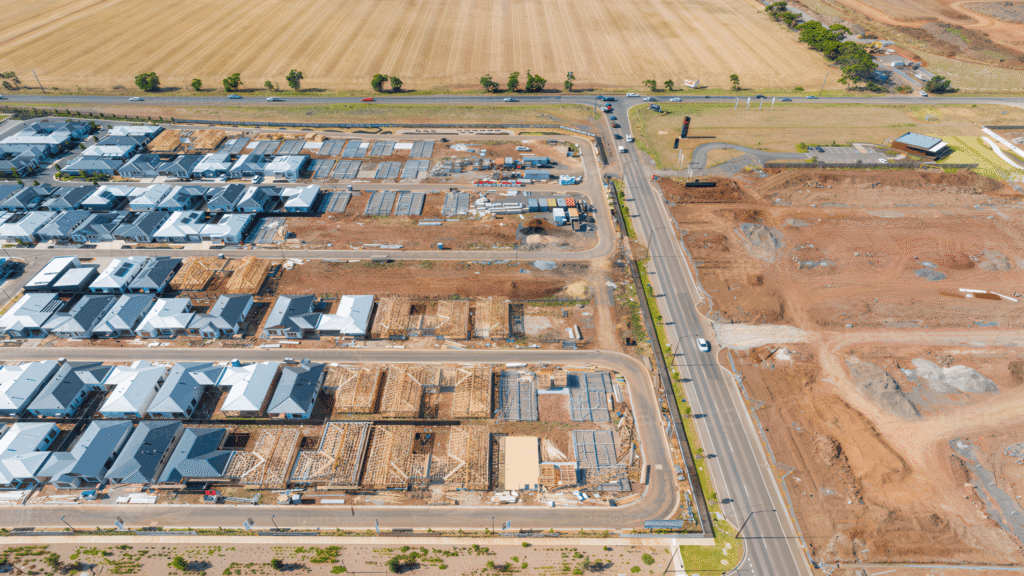
Whether assessing listed renewable equities or a project fund, the first step is to separate assets that already earn revenue from those still being built or approved.

A large development pipeline is not the same as future profit; earlier-stage projects depend on more milestones being met.
Source: FivePearls illustration. Illustrative only.
The main risks can then be framed as plain questions:
1. Price exposure: how much revenue depends on wholesale prices, and how much is contracted?
2. Grid access: can the project export all it generates, or will network limits curtail output?
3. Funding: what are the debt maturities, interest rate exposure and committed funding?
4. Policy reliance: which support scheme applies, and what conditions are attached?
5. Delivery: what are the construction cost, timetable and contractor risks?
6. Offtake and counterparty: who buys the output, on what terms, and how creditworthy are they?
7. Approvals and land access: are planning approvals, landholder agreements and community consent in place?
Our guide to Risk Assessment in Property Funds applies the same evidence-first approach to real assets more broadly.
Assessing Sustainability Claims
ASIC defines greenwashing as misrepresenting how environmentally friendly, sustainable or ethical a product is. A green label should prompt questions, not answer them. Moneysmart’s environmental, social and governance (ESG) guidance encourages investors to compare promotional language with a fund’s actual investment rules, exclusions and holdings.
What This Means for Investors
With AEMO’s roadmap running to 2050, Australia’s energy transition is expected to remain a significant investment theme. The investors best placed to assess these opportunities are those who understand exactly what they own, how it earns money, and what needs to go right.
Speak With Our Investment Team
If you would like to learn more about how our funds are structured, managed and reported on, our investment team can explain.
Frequently Asked Questions
Renewable energy investment in Australia is driven by retiring coal plants, rising electricity demand and government policy. AEMO projects grid-scale wind and solar capacity growing to nearly 120 GW by 2050.
Investors can gain exposure to renewable energy through listed shares, ETFs and managed funds, or unlisted funds investing in specific projects. Each carries different risks, costs and liquidity.
The main risks of renewable energy investments include electricity price exposure, grid access and curtailment, construction delays and cost overruns, funding needs, offtake and counterparty risk, approvals and land access, and changes to policy support.
Greenwashing is when a product is presented as more environmentally friendly, sustainable or ethical than it is. ASIC encourages investors to check a fund’s actual holdings and rules.
Project equity owns a share of a renewable energy project and is exposed to its price and delivery outcomes. Project debt lends to the project and typically ranks ahead of equity in repayment, but still carries credit and liquidity risk.
Operating projects already generate electricity and revenue. Development-stage projects still need approvals, land access, grid connection or construction, so they depend on more milestones being met.
Sources
- Least-cost pathway; grid-scale wind and solar from the current 23 GW to nearly 120 GW by 2050 (section 5.3, p.78) — AEMO: 2026 Integrated System Plan
- Storage and hydro (nearly 50 GW) and new transmission (around 6,000 km) by 2050, Step Change scenario — AEMO: 2026 Integrated System Plan, final report
- Coal retirements since 2012 (toolkit) and to 2035 (ISP section 5.2, p.76) — AEMO: 2026 ISP toolkit
- Revenue underwriting for eligible projects — DCCEEW: Capacity Investment Scheme
- Battery investment outlook and price spreads (key findings) — AER: Wholesale electricity market performance report 2026
- Definition of greenwashing — ASIC: How to avoid greenwashing
- ESG and thematic ETF guidance — Moneysmart: ESG investing; Moneysmart: ETFs
Important information
This article is general information only and has been prepared for wholesale investors. It does not take into account your objectives, financial situation or needs and is not financial, investment, legal or tax advice. Investments involve risk, including possible loss of capital. Past performance is not a reliable indicator of future performance. Review the relevant offer documents and seek independent professional advice before making any investment decision.
FivePearls Property Funds Pty Ltd (ACN 640 328 696) is the Investment Manager and a Corporate Authorised Representative (No. 001321331) of FivePearls Funds Management Pty Ltd (ACN 672 938 582, AFSL 700140), the Trustee. Investments can only be made by wholesale investors through the Application Form accompanying the relevant Information Memorandum.