What Is a Land Subdivision?

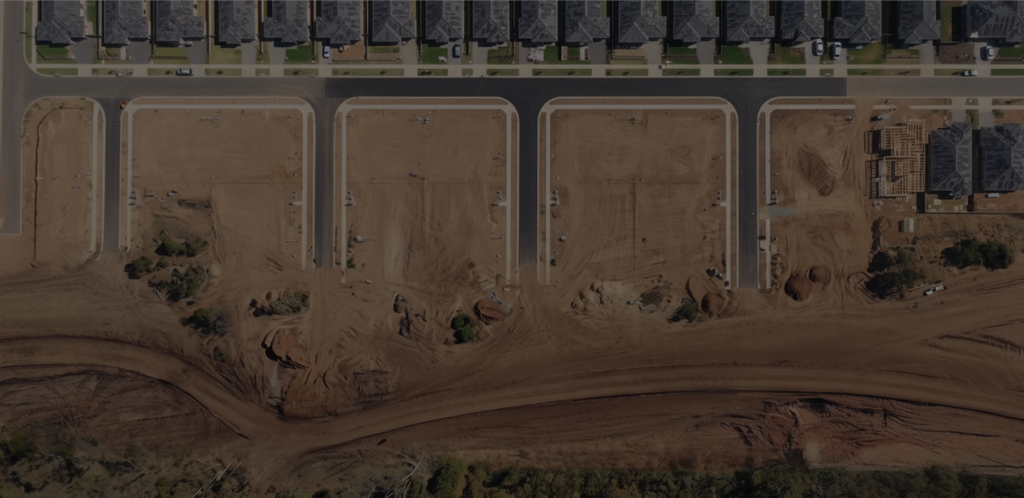
Aerial view of newly marked lots at a residential land subdivision site.
The Subdivision Lifecycle: Where Does Your Capital Sit?
Understanding a project’s distinct stages and knowing where your capital enters the lifecycle is fundamental to assessing a fund’s risk and return profile.
Site Acquisition
Everything begins with identifying and purchasing raw land. Rigorous due diligence at this stage covers zoning classifications, planning overlays, infrastructure access, and comparable sales. Getting this stage right sets the foundation for the entire project.
Planning & DA Approval
The developer formally engages with the local council through a Development Application (DA) to define the lot yield, road layout, and infrastructure requirements. Securing DA approval is a major de-risking milestone, converting a proposal into an agreed-upon path forward.
Civil Works & Construction
This is typically the most capital-intensive phase, where the physical transformation occurs. Roads, drainage, utilities, and lot boundaries are constructed, turning a planning document into a functioning, serviced piece of land.
Titles & Settlement
Finally, individual Torrens titles are issued for each lot. Buyers settle on their purchases, the project's value is realised, and investor returns are distributed.
The Macro-Drivers Behind the Asset Class

See how FivePearls structures these opportunities → View our current funds
The Language of Land Development
When reviewing a fund’s information memorandum, familiarity with industry terminology is key to evaluating the opportunity with confidence. Here are the essential terms:
NRV
The projected total revenue from lot sales after costs are accounted for. It is essentially the bottom-line figure that tells you what the project is expected to generate once every lot has sold.
Lot Yield
The number of titled lots a site produces after subdivision. More lots generally translate into higher revenue, which makes lot yield one of the first figures serious investors look for when assessing a project's scale.
DA Approval
The Development Application consent granted by council. It stands as a major de-risking milestone for any project, since it confirms that the plan has cleared a critical regulatory hurdle.
Torrens Title
Australia's system of individual land ownership, under which each lot receives its own registered title upon completion. It is this system that gives buyers, and by extension, investors, confidence in the security of ownership once a lot has settled.
LVR
The proportion of debt relative to the site's current value. As a general rule, a lower LVR signals a more conservatively geared capital structure, reducing (but not eliminating) leverage risk.
Preferred Equity
An investment structure that gives investors priority over common equity holders when profits are distributed. For wholesale investors seeking a more protected position in the capital stack, this structure is often central to how a fund is designed.
Key Risks Investors Should Understand
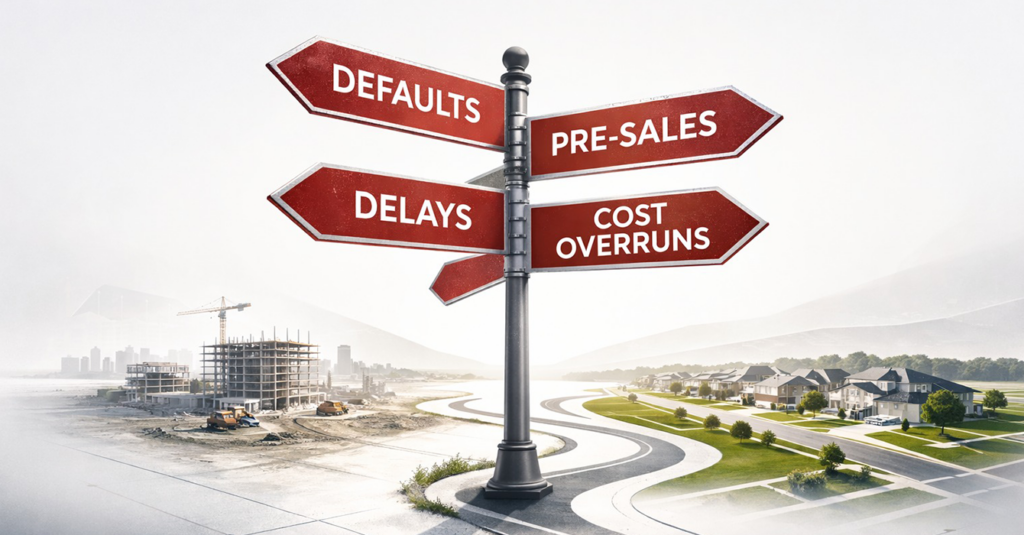
While land subdivision may involve lower construction complexity than vertical development, it still carries investment risk. These risks may include planning approval delays, civil works cost increases, changes in market conditions, settlement risk, liquidity risk, and potential loss of capital. A key part of a fund manager’s role is to identify, monitor, and manage these risks at each stage of a project; however, no level of experience or oversight can eliminate investment risk. Investors should carefully review the relevant offer documents, including the risks outlined within them, and seek independent financial advice before making any investment decision.
Why This Matters to You
Understanding the mechanics of a subdivision enables you to navigate conversations about DA status, projected lot yields, and where you sit in the capital stack with more confidence. These practical considerations help ensure the fund’s strategy aligns with your objectives for capital preservation and growth, noting that all investments carry risk and outcomes are not guaranteed.
Get the investor pack and start the conversation. Download the investor pack
Sources
- NSW Office of the Registrar General (2024). Torrens Title System Explained. Sydney: NSW Government.
- NSW Planning Portal (2024). Development Application (DA) Process. Sydney: NSW Government.
- Australian Securities and Investments Commission (2024). MoneySmart Glossary: Loan to Value Ratio (LVR). Canberra: ASIC.
- NSW Department of Planning, Housing and Infrastructure (2024). Population Growth and Infrastructure Investment. Sydney: NSW Government.
Required standard disclaimer
Frequently Asked Questions
Land subdivision is the process of taking a single parcel of raw, undeveloped land and dividing it into multiple individual lots. These newly created lots are then registered with their own titles and sold separately for residential housing.
A standard subdivision project moves through four primary stages: site acquisition, securing Development Application (DA) approval from the local council, completing the physical civil works, and finally, issuing individual titles and settling the lot sales.
While developers often purchase land directly, wholesale investors can participate by investing in managed property funds. This structure allows investors to pool their capital and rely on a professional fund manager to navigate the complex planning, construction, and settlement phases.
Development Application (DA) approval is a critical project milestone because it confirms the local council has formally agreed to the subdivision plan, including lot yield and road layouts. Securing this approval significantly reduces the regulatory risk associated with the site.
Land subdivision generally involves lower construction complexity than vertical high-rise developments. Because it focuses on established civil works like roads and drainage rather than complex engineering, it often reduces the risk of significant construction delays and cost blowouts, though standard market and project risks still apply.
Wholesale investors can contact the FivePearls team directly or download the investor pack to learn more about active opportunities.