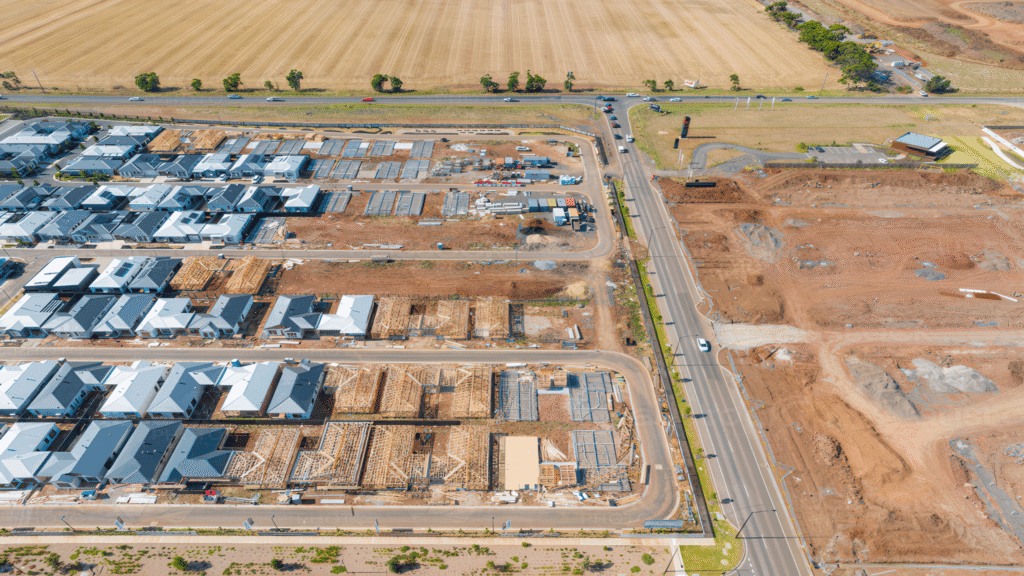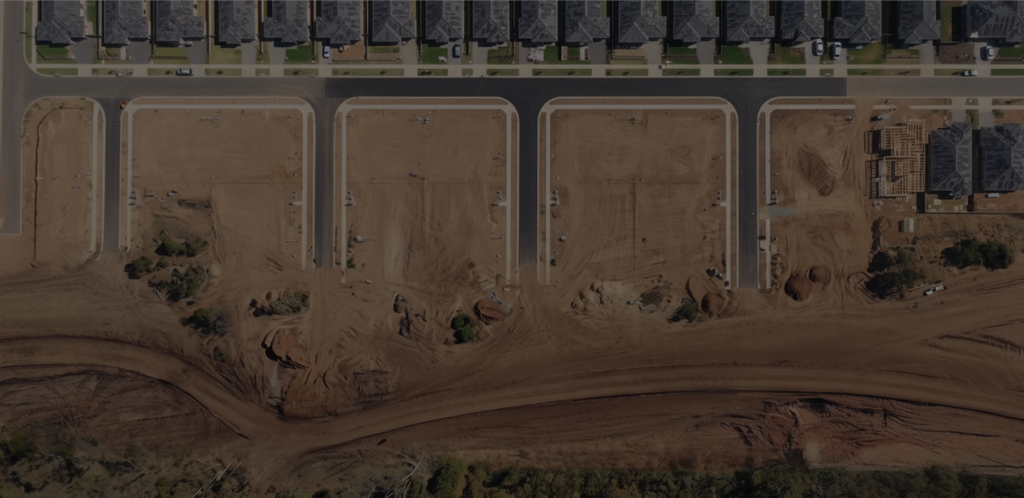

But behind the noise lies a simpler story, one grounded in basic economics. It is a story about land, and it explains why residential land subdivision is attracting attention from wholesale investors seeking exposure to Australian property fundamentals.
For investors considering property funds in Australia, this structural story explains why land-focused strategies continue to attract serious wholesale capital.
Finite Supply, Growing Demand
At its core, the case for land rests on a principle every economics student learns in their first year: when supply is constrained and demand increases, this can support long-term value, although investment outcomes are not guaranteed.
Residential land is a genuinely scarce resource. There is only so much of it available close to jobs, transport links, and schools, the features that make a location desirable in the first place. Meanwhile, Australia’s population continues to grow, and that growth is placing sustained pressure on housing demand. This is not a cyclical trend that might reverse next year. It is a structural imbalance that has been building for decades.
A Country That Is Under-Building
Australia’s housing shortfall is not a matter of opinion. It is measurable. The National Housing Accord has set a target of 1.2 million new homes, meaning Australia needs to deliver an annual rate of 240,000 new homes to reach this goal and bring supply back in line with population growth.
The trouble is that current data shows we fall well short of that target; in the 12 months to March 2026, just 197,340 new homes commenced construction. Every year the construction sector fails to keep pace, the gap between what is needed and what is built grows wider. That shortfall does not disappear. It compounds, keeping the market locked in structural undersupply for years to come.

The Greater Sydney Commission’s map of infrastructure and growth corridors. | Source: Draft Greater Sydney Structure Plan 2056, Greater Sydney Commission ↗
Sydney: A City Running Out of Room
Nowhere is this dynamic more visible than in Sydney. The city is boxed in on nearly every side, by the ocean to the east, mountains to the west, and a ring of national parks and environmental protections throughout. The result is a genuinely constrained supply of developable land within the metropolitan area.
At the same time, Sydney remains one of the country’s fastest-growing capital cities, drawing consistent net migration from both within Australia and overseas. New residents need somewhere to live, and the pool of available land to accommodate them keeps shrinking. It is a textbook case of demand rising against a hard supply ceiling.

Australian residential land prices have grown by over 500% since 2000. | Source: HIA-Cotality Residential Land Report (ABS, Cotality, HIA) ↗
The Numbers Behind the Story
Property market commentary can sometimes feel abstract, but the data on land values speaks plainly. According to HIA Chief Economist Tim Reardon, residential land prices have increased zby more than 500% since the year 2000. During that same period, construction costs and the price of skilled labour increased by around 150%, demonstrating that the long-run escalation in housing costs has been driven overwhelmingly by land.
This long-term growth reflects structural supply and demand pressures, although past performance is not a reliable indicator of future performance. It is a track record that has not gone unnoticed by Australian property funds seeking long-term, asset-backed returns.
The planned metro extension and road upgrades will elevate Rouse Hill as a suburb to live in and commute from, further elevating property values and rental yields.
Why Land Subdivision Carries Lower Construction Risk
Beyond the demand story, there is a practical case for land subdivision as an investment category: it involves lower construction complexity than vertical development, while still carrying planning, civil works, market, settlement and liquidity risks.
Subdivision projects do not involve high-rise towers, deep basements, or the complex engineering that comes with vertical construction. Instead, the work involves repeatable, well-understood civil processes, earthworks, road building, drainage, sewer connections, and essential services. This is one reason many investors choose to access land subdivision through a managed property fund rather than direct ownership, since a professional property fund manager can navigate planning, construction, and settlement risk on their behalf.
Structured well, these opportunities are often offered as unlisted property funds in Australia, giving wholesale investors exposure without the volatility of listed markets. This distinction matters for a few reasons:
- Simple, predictable civil works. Earthworks, roads, drainage, and sewer installation are established processes with known costs and timelines, not experimental engineering challenges.
- No high-rise risk. Without towers or basements to manage, projects avoid the technical complexity and delays that often plague vertical developments.
- A smaller construction cost share. Because construction makes up a smaller proportion of total project cost in a subdivision, the exposure to cost blowouts is correspondingly reduced.
- No dependence on a single builder. Subdivision projects are not tied to the fortunes of one high-rise construction firm, which removes the risk of builder insolvency derailing the entire project.
Key Risks Investors Should Understand
While residential land subdivision may involve lower construction complexity than vertical development, it still carries investment risk. These may include planning approval delays, civil works cost increases, market conditions, settlement risk, liquidity risk and potential loss of capital.
Investors should review the relevant offer documents and seek independent advice before making any investment decision.
The Opportunity in Land

Civil earthworks underway at a residential land subdivision site
See how FivePearls structures these opportunities → View our current funds
Put these threads together and a clear picture emerges. Finite supply, strong and growing demand, and a long track record of price growth combine to make a compelling case for well-located residential land and subdivision projects. Add the lower complexity of civil-works-based development, and land subdivision stands out as a category worth serious attention from investors looking for exposure to Australian property fundamentals.
The market conditions driving this opportunity are not temporary. They are structural, built into the geography of our cities and the trajectory of our population growth. For investors thinking about where real, lasting value in Australian property is likely to come from, the answer increasingly points back to the land itself. For wholesale investors looking to invest in property funds that combine finite supply, strong demand, and long-term price growth, land subdivision remains one of the more compelling entry points into property funds available in Australia. Wholesale property funds built around this exact thesis are where much of that opportunity is captured, and where a well-structured property fund can provide structured exposure to these underlying property fundamentals.
Frequently Asked Questions
A property fund is a pooled investment vehicle that raises capital from multiple investors and deploys it into real estate assets or property-related projects on their behalf. Investors hold units in the fund rather than owning a property directly, while a professional fund manager handles acquisition, management, and eventual sale of the underlying assets.
accessed directly through a fund manager. Because they do not fluctuate with daily market sentiment, they are generally less volatile than listed funds, but they carry different liquidity profiles and specific project risks.
No. FivePearls opportunities are available to wholesale investors only, subject to eligibility requirements and specific offer documents.
Land subdivision strategies are driven by strong supply and demand fundamentals. They generally involve lower construction complexity compared to vertical developments, while still carrying standard planning and project risks.
Yes. Property funds carry a range of risks, including market risk, liquidity risk, project-specific development risk, and potential loss of capital. A well-structured fund will set these out clearly in its Information Memorandum, and a reputable manager will be transparent about how each risk is managed.
Wholesale investors can contact the FivePearls team directly or download the investor pack to learn more about active opportunities.